Room Acoustics Without Treatment
How speaker placement, listening position, and room interaction affect sound more than gear. First reflections, the subwoofer crawl, and practical advice for untreated rooms.
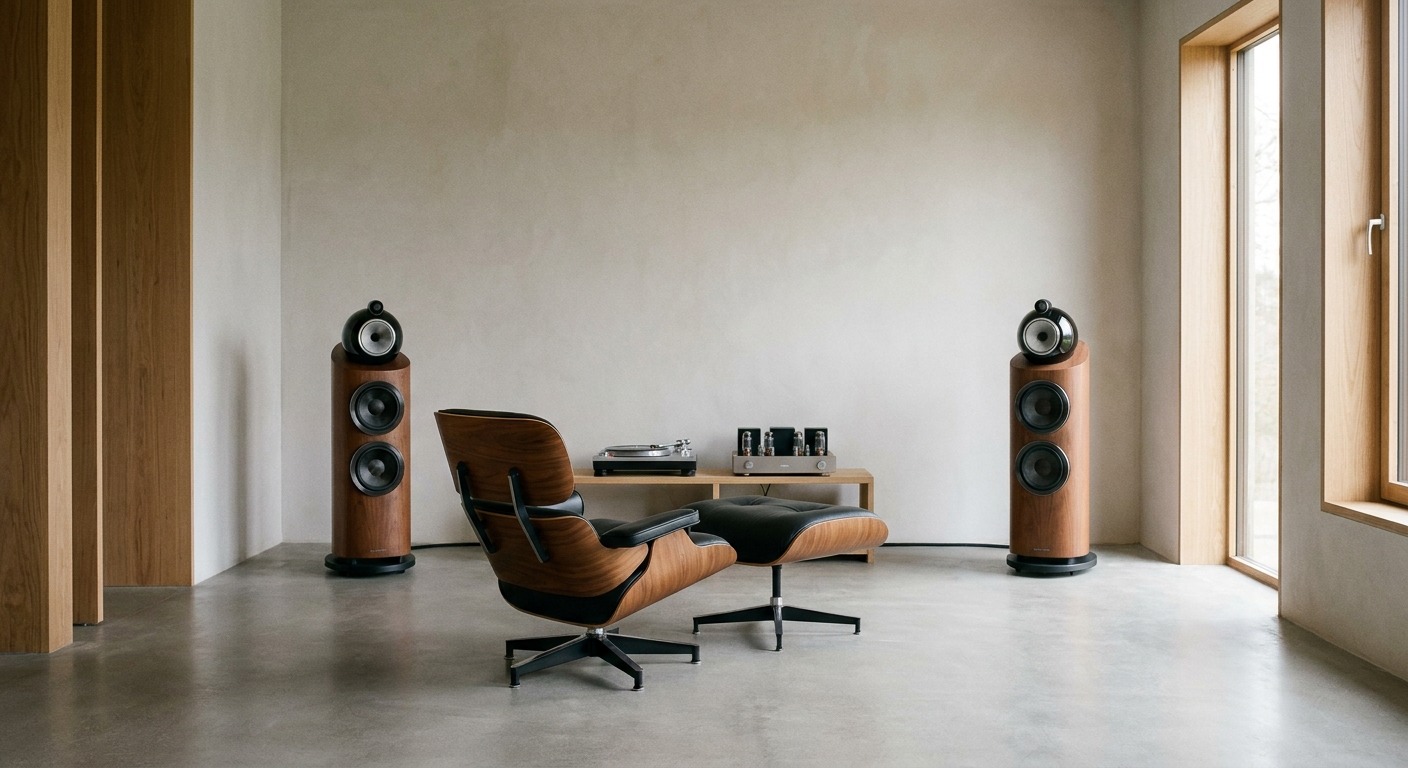
Here is an uncomfortable truth that the audio industry does not advertise: your room has more effect on what you hear than any single piece of equipment in your system. More than your amplifier. More than your speakers. More than whatever source component you agonized over. The room shapes, filters, boosts, cancels, and smears the sound before it reaches your ears, and no amount of money spent on gear will fix a bad room interaction.
The good news is that you do not need acoustic panels, bass traps, or a dedicated listening room to get dramatically better sound. You need to understand a few basic principles and be willing to move some furniture. Most of the acoustic problems in a living room can be addressed with speaker placement and listening position changes that cost nothing.
Why the Room Matters So Much
When a speaker plays a sound, some energy travels directly to your ears. The rest bounces off walls, floor, ceiling, and furniture, arriving milliseconds later. Your brain combines all of it into what you perceive as the speaker's sound. Hard surfaces reflect most frequencies. Soft surfaces absorb high frequencies while reflecting lows. The result is a complex interference pattern that varies with frequency and position.
At low frequencies, the situation gets worse. Bass wavelengths are long — a 50 Hz tone has a wavelength of about 22 feet. In a room that size (which many living rooms are), the sound wave fits between the walls and resonates. These room modes create standing waves: fixed patterns of reinforcement and cancellation. At some positions, a bass note will be 15 dB louder than it should be. At others, the same note nearly disappears. No EQ or speaker upgrade can fix this. Only position can.
Key point: Room modes are not a flaw in your speakers. They are a consequence of physics interacting with your room's dimensions. Moving the speaker or moving your listening position by even a foot can change the bass response more than upgrading to a speaker that costs three times as much.
Speaker Placement: The Free Upgrade
The most impactful thing you can do is pull your speakers away from the walls. When a speaker is close to a wall, the wall acts as a reflective boundary that reinforces bass frequencies. Against a wall, you get a 3 dB bass boost. In a corner, you get roughly 6 dB of boost. This sounds like a good thing until you realize that the boost is not flat — it emphasizes certain frequencies (those that correspond to the room modes) while leaving others alone, creating uneven, boomy bass.
Start with your speakers at least two feet from the rear wall and at least a foot from side walls. Yes, this means the speakers are "in the room" rather than pushed against the wall where they look neat. Acoustics and interior design are often at odds. If you care about sound quality, the speakers win.
Speaker spacing matters too. The classic starting point is an equilateral triangle: the distance between the two speakers equals the distance from each speaker to your listening position. This is a starting point, not a rigid rule, but it gives you a well-defined sweet spot with stable center imaging.
Toe-in (angling the speakers inward) affects the balance between direct and reflected sound. More toe-in gives a focused, precise presentation. Less toe-in gives a wider soundstage but may increase the brightness of side-wall reflections. Experiment in small increments — it is a surprisingly powerful adjustment.
First Reflections: The Big Three
Early reflections — sounds that bounce once off a nearby surface — arrive within 5-15 milliseconds of the direct sound. Your brain fuses them with the direct sound rather than hearing them as echoes, which means their frequency content directly changes the perceived tonal balance.
The three most important reflection points are:
- The side walls. Usually the strongest early reflections and the most damaging to stereo imaging. Find the reflection point with the mirror trick: have someone slide a mirror along the wall while you sit in the listening position. Where you see the tweeter in the mirror is the first reflection point.
- The ceiling. The midpoint between each speaker and your ears. Ceiling reflections primarily affect upper midrange and treble.
- The floor. Usually partially addressed by carpet or a rug. If you have hardwood or tile, a thick rug between the speakers and listening position makes a measurable difference.
You are not going to hang absorption panels in a living room. But you can use what is already there. A bookshelf at the first reflection point scatters reflections. A heavy curtain absorbs high frequencies. An upholstered couch at the listening position provides absorption behind your head. These are not precision treatments, but they meaningfully reduce the worst problems.
The difference between a bare, hard-walled room and the same room with a rug, curtains, and some furniture is acoustically significant. You do not need purpose-built acoustic panels to have a room that sounds decent. You need soft things that absorb and uneven surfaces that scatter.
The Subwoofer Crawl: Finding Bass That Works
If you have a subwoofer, its position is critical and non-obvious. The best spot is almost never in a corner, despite the common advice. Maximum output and best-quality output are different things. The subwoofer crawl finds the best position:
- Place the subwoofer at your listening position — in the chair where you sit. This sounds absurd but is acoustically valid due to reciprocity.
- Play bass-heavy music or a test tone sweep (20-80 Hz) at moderate volume through the subwoofer.
- Crawl around the room on your hands and knees, with your head at the height where the subwoofer will eventually sit. Listen to the bass at various positions along the walls and in the corners.
- Find the position where the bass sounds most even — not the loudest, but the most even across different frequencies. Some positions will have enormous bass at one frequency and nothing at another. Others will sound more balanced.
- Place the subwoofer at the position where the bass sounded best from your crawl.
This works because bass is omnidirectional and room modes are position-dependent. The optimal position is usually along a wall but not in a corner. Every room is different, and the crawl is the only way to find what works in yours.
The Listening Position: Where You Sit Matters
The same speakers in the same room sound dramatically different depending on where you sit. The worst position is dead center — equidistant from all four walls, where multiple room modes intersect. Moving forward or backward by even a foot changes the bass response noticeably.
Try placing the listening position at roughly 38% of the room's length from the front wall. This avoids the worst room mode peaks and nulls. Use your ears: move the chair, play familiar bass-heavy music, and find the spot where the bass sounds most even.
Key point: Before you spend money on a new subwoofer, new speakers, or room treatment, move your listening position and your speakers. The improvement from optimized placement in an untreated room will be larger than the improvement from adding treatment to a room with poor placement.
What About Room Correction Software?
Many receivers include room correction software (Audyssey, Dirac Live, etc.) that measures the room and applies EQ. These help, but have fundamental limitations.
Room correction can reduce peaks — frequencies that are too loud due to room reinforcement. What it cannot do is fill in nulls — frequencies that cancel at the listening position. You cannot add energy that the room is destroying. It also cannot fix time-domain problems: a room mode that rings after the signal stops will still ring after EQ correction.
Use room correction as a supplement to good placement, not a substitute. Run the correction after you have optimized speaker and listening positions, so it is working on smaller problems where it is most effective.
Practical Priorities
If you want the best sound from your system without buying anything, work through these adjustments in order:
- Pull speakers away from walls (two feet minimum from the rear wall).
- Set up the stereo triangle (equal distance between speakers and to the listening position).
- Experiment with toe-in (aim the tweeters toward your ears and adjust).
- Move the listening position away from the center and rear wall of the room.
- If you have a subwoofer, perform the subwoofer crawl to find the best position.
- Add a rug between the speakers and the listening position if the floor is hard.
- Use curtains, bookshelves, and furniture at first reflection points where possible.
- Run room correction software last, after placement is optimized.
This sequence matters because each step builds on the previous one. There is no point running room correction if the speakers are shoved in corners — the correction will be fighting problems so large that it cannot solve them. Get the big things right first, then refine.
For understanding the speakers themselves — why they interact with the room the way they do and what qualities to look for — read what makes a speaker sound good. If you are choosing between bookshelves and towers, the room acoustics perspective is essential to that decision. The room does not care how much your speakers cost. It cares where they are. Start there.