Vinyl vs Digital: An Honest Comparison
A fair and measured look at vinyl versus digital audio, covering measurable performance, mastering differences, the ritual factor, and what actually matters.
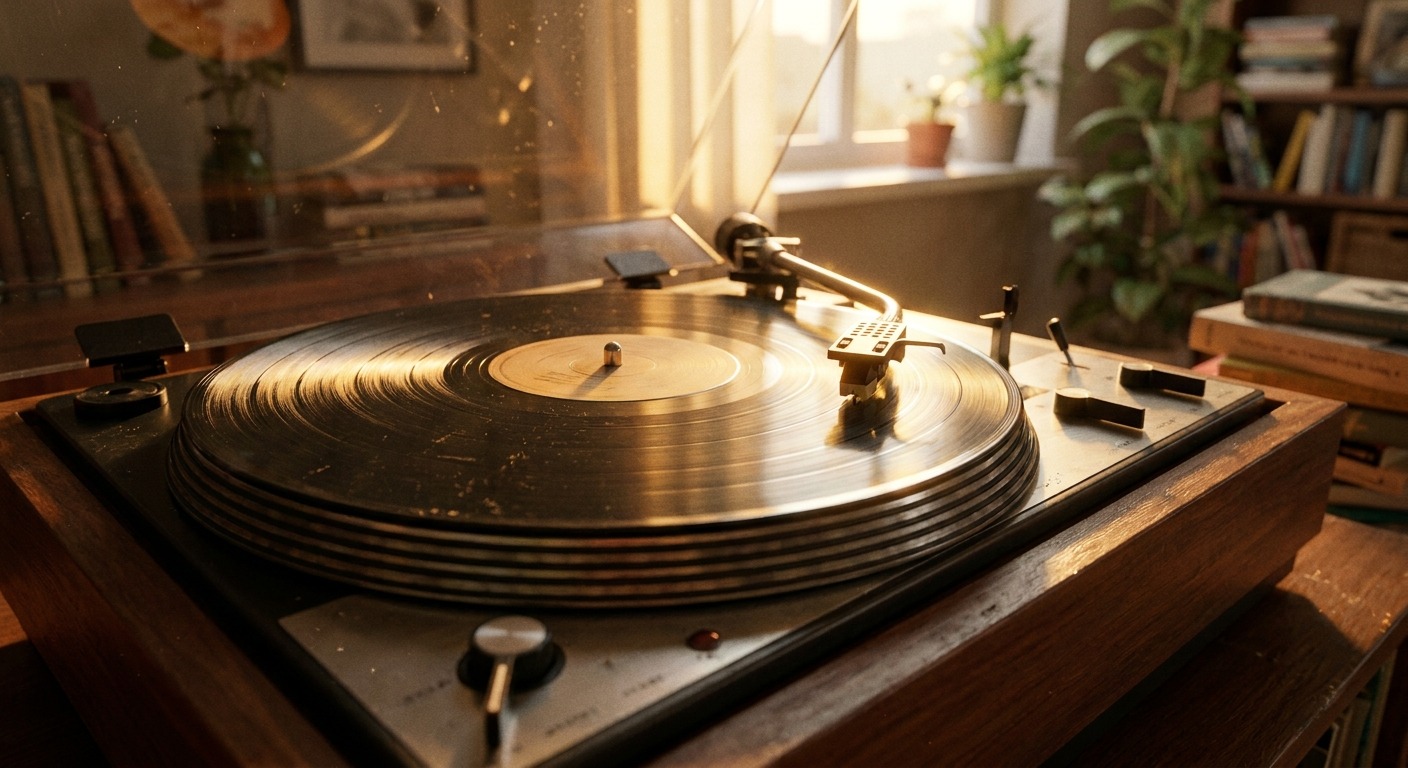
Few topics in audio generate more heat and less light than the vinyl versus digital debate. On one side, vinyl romantics who insist that records have a warmth and life that digital cannot capture. On the other, digital advocates who point to measurements showing vinyl is technically inferior in every quantifiable way. Both sides are partly right and partly missing the point.
What follows is an attempt to lay out the facts honestly, acknowledge the subjective realities, and let you make your own decision without the usual propaganda from either camp.
The Measurable Reality
On every objective metric that audio engineers use to evaluate a format, digital wins. This is not opinion. It is physics and mathematics.
Dynamic range: a CD offers roughly 96 dB of dynamic range. A well-pressed vinyl record on a good turntable might manage 60 to 70 dB. High-resolution digital files push beyond 120 dB. Vinyl cannot compete here. The format physically cannot encode the difference between very quiet and very loud sounds with the same precision.
Noise floor: digital audio has a noise floor that is essentially silent. Vinyl has surface noise, even on a pristine new pressing. The crackle, the hiss, the rumble from the turntable motor, all of these are inherent to the format. They can be minimized with good equipment and careful handling, but they cannot be eliminated.
Distortion: the inner grooves of a vinyl record produce more distortion than the outer grooves because the stylus is tracking a tighter curve at a slower linear velocity. This is why mastering engineers often put the quieter, less demanding tracks near the label. Digital has no such limitation. The last track sounds identical to the first.
Vinyl vs digital by the numbers:
- Dynamic range: Vinyl ~60-70 dB vs CD 96 dB vs hi-res digital 120+ dB
- Frequency response: Vinyl ~20 Hz-20 kHz (with RIAA curve) vs digital flat to Nyquist limit
- Channel separation: Vinyl ~30 dB vs digital 90+ dB
- Noise floor: Vinyl -60 to -70 dB vs digital below -96 dB
- Distortion (THD): Vinyl ~0.5-2% vs digital below 0.001%
Channel separation is another area where vinyl struggles. The left and right channels on a record are cut into the same groove at different angles, and the stylus picks up both simultaneously. Crosstalk between channels is significantly higher than digital, where left and right are completely independent data streams. If you want to understand more about how speakers reproduce these signals, our guide on how speakers work covers the fundamentals.
The Mastering Difference
Here is where the vinyl advocates have a legitimate point, even if they often attribute it to the wrong cause. Many vinyl releases genuinely do sound better than their digital counterparts. But the reason is not the format. The reason is the mastering.
Since the mid-1990s, the loudness war has plagued digital music. Mastering engineers, pressured by labels and artists, have crushed the dynamic range of digital releases to make them sound louder on radio, in playlists, and through earbuds. A modern digitally mastered pop album might use only 6 to 8 dB of dynamic range from a format capable of 96 dB. That is like buying a sports car and driving it exclusively in first gear.
Vinyl releases often receive different masters because the format physically cannot handle the same level of compression. You cannot cut a record with zero dynamic range. The grooves would be unplayable. So the vinyl master tends to be more dynamic, more spacious, and less fatiguing to listen to. People hear this difference and attribute it to the superiority of analog. What they are actually hearing is the superiority of that particular mastering job.
If you took the vinyl master and released it digitally, it would sound just as good through your DAC. Some labels have started doing exactly this, offering "vinyl mastered" digital downloads. They sound excellent, which rather proves the point.
What Vinyl Does Differently
Vinyl is not just a worse digital format. It is a different experience with its own characteristics that some people genuinely prefer. The RIAA equalization curve applied during cutting and playback shapes the sound in a specific way. The slight compression of transients that happens mechanically during the cutting process can round off harsh edges. The harmonic distortion added by the cartridge, tonearm, and phono stage can add a subtle richness that some ears find pleasing.
This is not imaginary. It is measurable. But it is also not fidelity. It is colouration. If the goal is to hear exactly what was recorded in the studio, digital is the objectively better tool. If the goal is to hear something that sounds pleasant and engaging to your particular ears, vinyl's colourations might genuinely appeal to you. Neither goal is more valid than the other.
Setting up a turntable properly also matters enormously. Tracking force, anti-skate, cartridge alignment, and phono stage matching all affect the sound significantly. A poorly set up turntable sounds terrible. A well-set-up one can sound genuinely beautiful, even if it is technically less accurate than a $9 Apple dongle feeding the same speakers.
The Ritual and the Object
There is something that measurement-obsessed digital advocates consistently undervalue: the experience of playing a record. Sliding the disc from its sleeve. Placing it on the platter. Dropping the needle. Sitting down and listening to a full side because getting up to skip tracks is inconvenient. This forced attentiveness changes how you hear music.
When you stream an album, you are three thumb-taps away from skipping to something else. When you are playing a record, you commit. You read the liner notes. You look at the artwork at a size that actually rewards attention. You listen to deep cuts because the needle is already there. This is not a technical advantage. It is a behavioural one, and it is real.
The best-sounding format is whichever one makes you sit down and actually listen. For some people, that is vinyl. Not because of the signal path, but because of the ritual.
Records are also physical objects with aesthetic value. A shelf of well-curated vinyl communicates something about the collector. It invites browsing and conversation in a way that a Spotify library does not. These are not audio arguments. They are human arguments, and they matter to people who buy records.
The Cost Reality
Vinyl is expensive. A new pressing costs $30 to $50 in Canada. A decent turntable starts around $400. A proper phono preamp adds another $100 to $300. You need to maintain the stylus, clean your records, store them properly. The ongoing cost per hour of listening is dramatically higher than a streaming subscription.
Digital, meanwhile, offers essentially unlimited music for $10 to $15 per month through streaming, or permanent ownership of high-resolution files through download stores. The quality ceiling is higher. The convenience is incomparable. The cost is a fraction of a vinyl habit.
None of this means vinyl is a bad purchase. People spend money on hobbies. A $40 record that you play fifty times and treasure for years is a perfectly reasonable entertainment expense. But the idea that vinyl is a practical choice for music listening is a stretch. It is a luxury hobby. Own that and enjoy it rather than pretending the economics make sense.
The Community Factor
One thing that keeps vinyl culture vibrant is the community around it. Record shops, swap meets, and listening parties create social connections that streaming simply does not generate. Across Ontario, from Ottawa to Thunder Bay, small towns and cities maintain record stores that serve as gathering points for music lovers. In communities like Pembroke, Arnprior, and Renfrew County more broadly, the interest in local arts and music culture stays alive through word of mouth and community events listed at petawawa.com and similar town hubs that connect people with cultural activities. North Bay, Sudbury, and Barrie all have active collector scenes. These connections have value that transcends the audio quality debate entirely.
Digital listening, by contrast, is largely a solitary activity. You can share playlists, but you cannot flip through someone's streaming history the way you can flip through their record collection. The social dimension of vinyl is a genuine advantage that no amount of bit depth can replicate.
The Honest Verdict
If you care about measured audio fidelity, dynamic range, noise floor, distortion, and channel separation, digital is superior and it is not close. This is settled science. Anyone telling you vinyl is technically better is either misinformed or selling turntables.
If you care about the listening experience, the ritual, the physical object, and the mastering differences that often favour vinyl releases, then records offer something genuine that digital does not. Neither preference is wrong.
The most honest approach is to stop treating it as a competition. Many serious listeners own both. They stream for discovery and convenience. They buy vinyl for albums they love deeply and want to experience as physical artifacts. They understand that the diminishing returns curve in audio applies to formats just as much as it applies to equipment.
Play music on whatever format makes you happy, but do not let anyone convince you that the format matters more than the music itself, or more than the speakers you play it through. A great album on a mediocre system will always move you more than a mediocre album on a reference system. Understanding what makes speakers sound good and learning the basics of how crossovers shape the signal will serve your listening life far better than any format war ever could.