DAC and Amp: Do You Need Both?
What a DAC does, what a headphone or speaker amp does, when your built-in hardware is good enough, and when external units actually improve your sound.
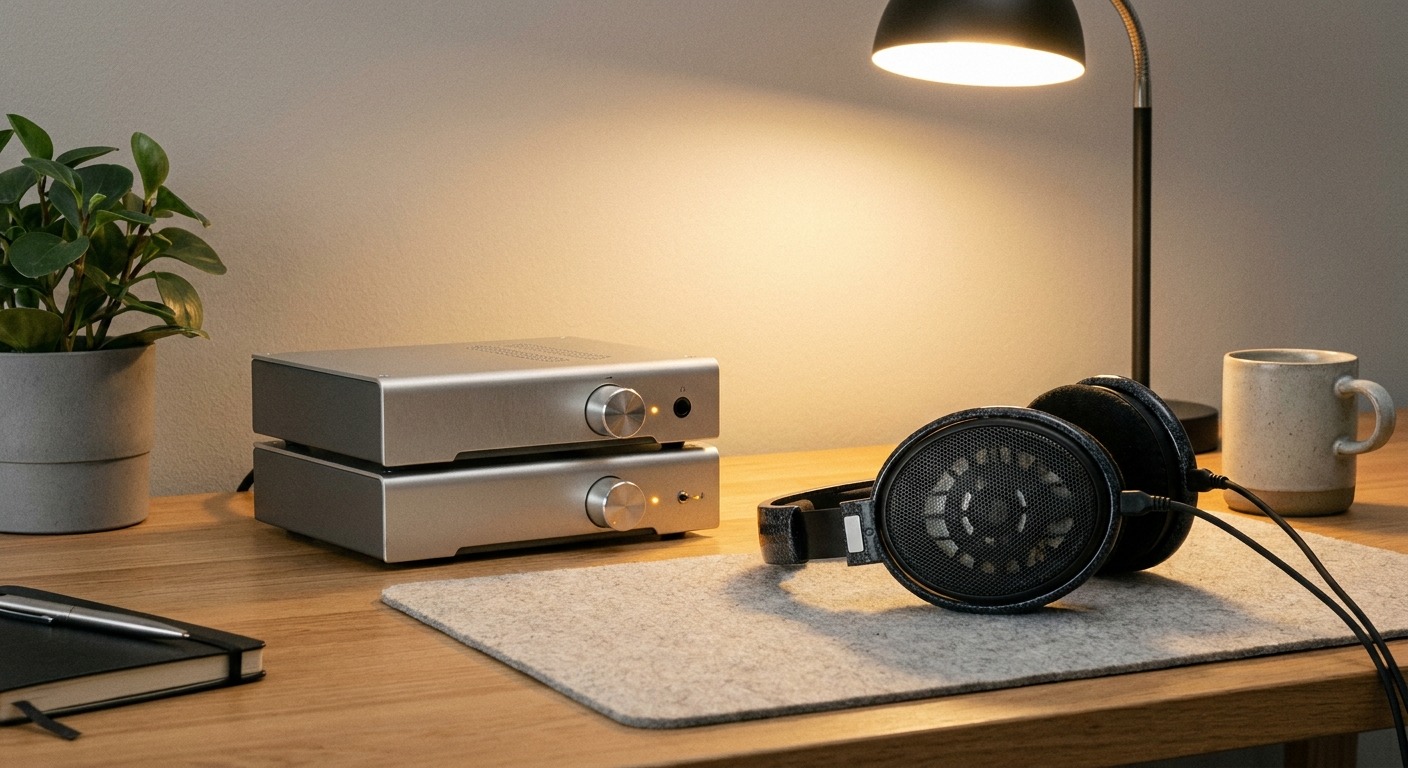
The audio world loves to make simple things complicated, and the DAC-and-amp question is a perfect example. Forums are full of passionate arguments about external DACs, dedicated amplifiers, and whether your phone's headphone jack is secretly ruining your music. Most of this is overblown. Some of it is legitimate. Sorting out which is which requires understanding what these devices actually do.
What a DAC Does
DAC stands for digital-to-analog converter. Every device that plays digital music has one. Your phone has one. Your laptop has one. Your television has one. The DAC's job is straightforward: it takes a stream of digital data, which is just numbers representing amplitude values at regular intervals, and converts those numbers into a continuous analog electrical signal that can eventually move a speaker cone or headphone driver.
A good DAC does this conversion accurately. It reproduces the signal encoded in the file without adding noise, distortion, or other artifacts. A bad DAC introduces audible problems: hiss, crackling, a thin or harsh quality to the sound, or a lack of detail. The important thing to understand is that DAC quality has improved so dramatically over the past fifteen years that truly bad DACs are becoming rare in modern hardware.
The DAC chip in a current-generation smartphone measures remarkably well. Apple's Lightning and USB-C dongles, for instance, test at distortion levels far below human hearing thresholds. Most modern laptops and motherboards from reputable manufacturers include DACs that are, from a pure measurement standpoint, essentially transparent. They add no audible colouration to the signal.
What an Amp Does
An amplifier takes an analog audio signal and increases its power so it can drive speakers or headphones. This is the part of the chain that actually does physical work, providing enough electrical current to move the voice coil in a speaker driver back and forth with precision.
For headphones, the amplifier needs to provide enough voltage and current to drive the headphone's particular impedance and sensitivity. Easy-to-drive headphones, like most consumer models with low impedance and high sensitivity, need very little power. Harder-to-drive headphones, like the Sennheiser HD 600 or various planar magnetic designs, need considerably more.
For speakers, the amplifier must provide significantly more power. Even a pair of efficient bookshelf speakers needs watts, not milliwatts. This is why passive bookshelf and tower speakers require a separate amplifier or receiver, while active speakers have amplification built in.
A good amp provides clean power with low distortion across its operating range. It maintains control of the driver even during demanding passages. A poor amp, or one that is inadequate for the load it is driving, clips, compresses dynamics, or simply cannot play loud enough without distortion.
When Your Built-In Hardware Is Fine
Here is the part the audio industry would prefer you not hear: for a large number of common listening scenarios, the DAC and amp built into your device are perfectly adequate. If you are using reasonably efficient headphones, like most models under $300 with impedances below 80 ohms and sensitivities above 100 dB, your phone or laptop will drive them to satisfying levels without audible distortion.
If you are listening through powered desktop speakers, those speakers have their own amplifier and DAC (or at least an amp). Plugging them into your computer's headphone jack is sending them a line-level signal that their internal amp handles. The DAC in your computer does the conversion, and unless your computer has an unusually noisy audio implementation, this works fine.
You probably do not need an external DAC or amp if:
- Your headphones have impedance below 80 ohms and sensitivity above 100 dB/mW
- You hear no hiss, hum, or noise from your current source
- Volume reaches comfortable levels without maxing out
- You are using powered/active speakers with built-in amplification
- Your device was manufactured after roughly 2018
The scenario where built-in hardware genuinely fails is when you hear obvious noise (buzzing, hissing, or interference from other components) or when your headphones simply will not get loud enough. Both of these are real problems with real solutions. But "I read online that external DACs sound better" is not, on its own, a reason to spend money.
When External Actually Matters
There are legitimate cases for dedicated external hardware. Desktop computers, particularly older ones or those with noisy graphics cards, sometimes have poor analog audio output due to electromagnetic interference inside the case. An external USB DAC physically moves the digital-to-analog conversion away from that noisy environment, and the improvement can be genuinely audible. You hear it as a drop in the noise floor: the space between notes gets quieter and blacker.
High-impedance headphones are the other clear case. Something like the Beyerdynamic DT 880 at 600 ohms or the HD 600 at 300 ohms draws more current than most portable devices can comfortably supply. You will notice the sound is thin, lacks bass weight, and does not get loud enough. A dedicated headphone amp solves this completely. It is not subtle. Understanding impedance and power relationships helps explain why some headphones need more amplification than others.
Passive speakers always need a dedicated amplifier. There is no getting around this. If you own unpowered bookshelf speakers or floor-standing towers, you need either an integrated amplifier, a receiver, or separate pre-amp and power amp components. The amplifier is not optional; it is what makes the speakers produce sound.
Combo Units vs Stacking Separates
If you decide you need external hardware, you face a choice: a combined DAC/amp unit, or separate components. For headphone use, combined units dominate the market and make the most sense for most people. Products like the Schiit Magni/Modi stack, the Topping DX3 Pro+, or the iFi Zen DAC handle both conversion and amplification in a single box or a tidy pair.
Separate components make more sense when you have specific needs. Maybe you already own a good amplifier and just need a cleaner DAC. Maybe you want a tube headphone amp for its particular character but want a solid-state DAC feeding it. Or maybe you are building a speaker system and need a DAC to feed a power amplifier or integrated amp.
The practical advice is simple: start with a combo unit unless you have a specific reason to buy separates. A $200 DAC/amp combo in 2026 measures better than separates costing ten times as much did fifteen years ago.
The stacking approach, where you buy a separate DAC and a separate amp, does offer more flexibility for future upgrades. If your headphone collection grows to include harder-to-drive models, you can upgrade just the amp. If a better DAC chip comes along, you can swap just the DAC. But this is planning for a future that may never arrive, and the price premium over a good combo unit is real.
The Diminishing Returns Problem (Again)
DACs and amps are subject to the same diminishing returns that affect every other audio component. A $100 DAC in 2026 typically measures at distortion levels below negative 110 dB, which is far beyond what human ears can detect. A $1,000 DAC might measure at negative 120 dB. The difference exists on paper. It does not exist in your listening experience.
Amplifiers have a slightly wider range of audible variation because they interact with the impedance characteristics of whatever they are driving, and their behaviour under load matters. But even here, a well-designed $200 solid-state amplifier is essentially transparent with most headphones and many speakers. The returns diminish rapidly above that price point.
Where you might genuinely benefit from spending more is on features and build quality. A more expensive amp might offer balanced outputs, more headphone jack options, a better volume pot with improved channel matching at low levels, or simply a more durable chassis. These are convenience and quality-of-life improvements. They are not improvements to the sound itself, and anyone telling you otherwise is selling something.
A Practical Decision Framework
Start by plugging your headphones or powered speakers into whatever device you already own. Listen for problems. Is there audible hiss or hum? Is the volume insufficient? Does the sound seem thin or distorted at higher volumes? If the answer to all of these is no, you do not need external hardware right now. Spend your money on better headphones or better speakers instead, because that is where audible improvement actually lives.
If you do hear problems, an external DAC/amp combo in the $100 to $250 range will almost certainly solve them. Go to a site like Audio Science Review and look at measurements for units in your budget. Buy something that measures well and has the inputs and outputs you need. You are done.
If you own high-impedance headphones or inefficient planar magnetics that your current source cannot drive properly, a dedicated headphone amp is the answer. Pair it with an external DAC if your source is noisy, or feed it from your existing device's line output if the signal is clean.
And if you are running passive speakers, you need an amplifier matched to your speakers' impedance and sensitivity. This is non-negotiable, and the principles of amp matching apply whether you are powering a car system or a living room setup.
The audio industry benefits from making this seem more complicated than it is. DAC converts digits to signal. Amp makes signal powerful enough to move a driver. Your built-in hardware probably does both of these things adequately for your needs. If it does not, the fix is affordable. The rest is marketing.